Spreadsheets are no longer enough
Too many people edit the same files, versions get mixed up, and important information is hard to find.

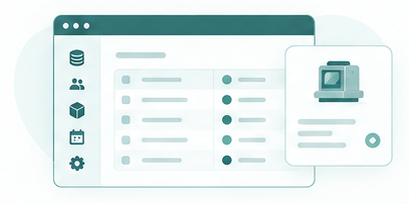
We create internal apps and focused systems for specific business needs: data, roles and access, client portals, reports, document workflows, and other tasks that have outgrown spreadsheets or do not fit standard software.
Too many people edit the same files, versions get mixed up, and important information is hard to find.
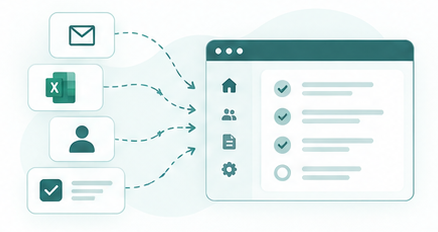
Employees move data between tools and repeat the same actions every day.
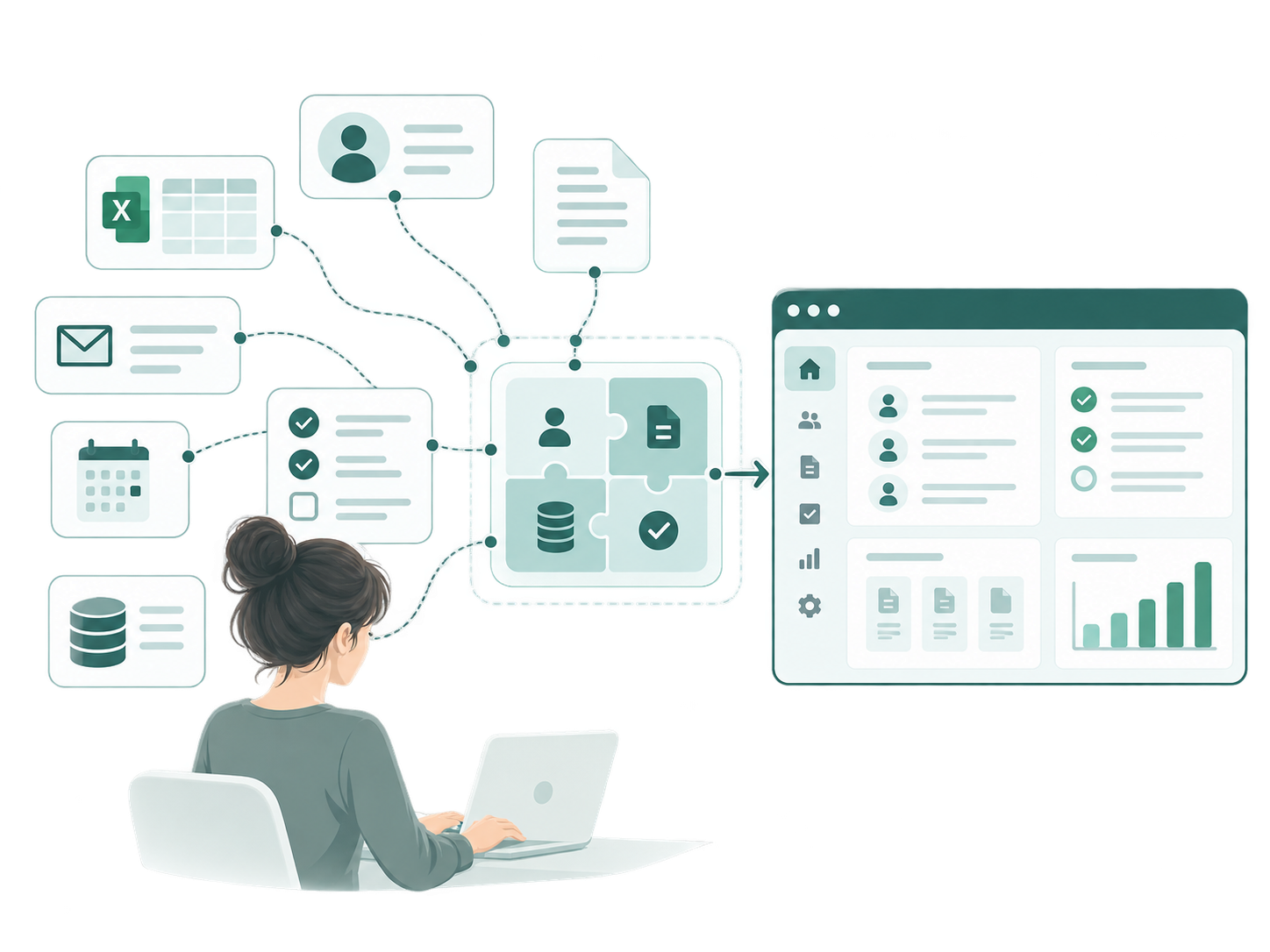
Part is in email, part in spreadsheets, part in another system, and the full picture has to be assembled by hand.
A single place is needed for orders, statuses, tasks, documents, or collaboration with clients and partners.
A large CRM, ERP, or task manager includes too much, while the functions you actually need are missing.
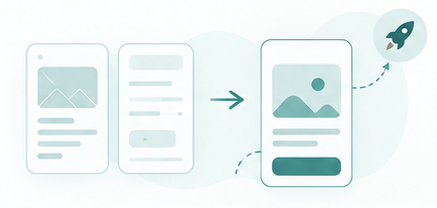
You need a working first version, or MVP, before investing in a larger product.
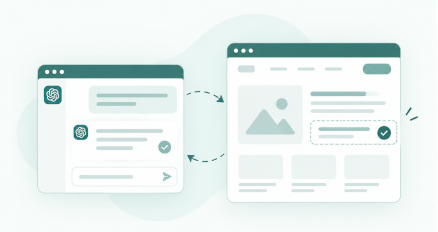
Add new copy, update website content, and manage your online store with a simple message in ChatGPT.
One interface for data, tasks, statuses, and key metrics, so you do not have to switch between multiple services.
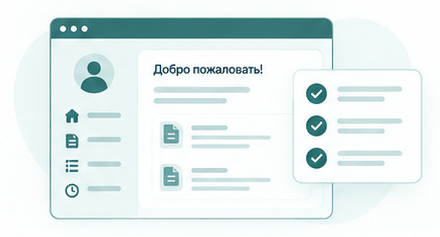
A secure place where clients can view their information, documents, order status, or complete the next action.
Tools for tasks where a result depends on several conditions and is currently calculated by hand.
Focused tools that replace an oversized general-purpose system.
A working first version of an idea that can be tested with users before larger development begins.
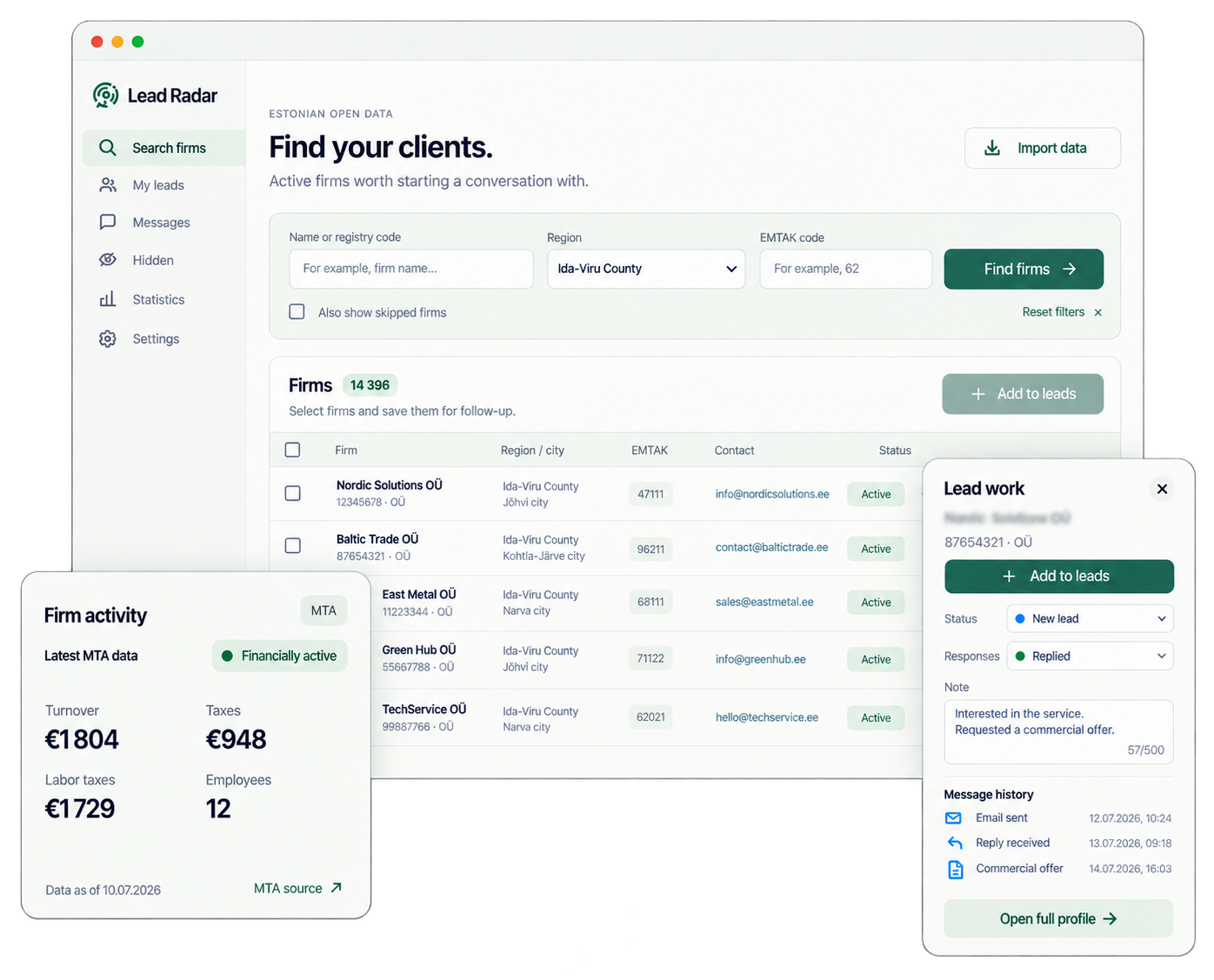
Lead Radar helps you find suitable Estonian companies by looking at their activity, employee count and turnover trends. You can then manage them as leads in one place.
Before development begins, we define how data, access, and user actions will be protected.
Different employees can have different roles and permissions.
Viewing, editing, deleting, or administrative functions.
Authentication, session management, and MFA when needed.
Input validation, protected forms, and safe file handling.
Predictable system behaviour without corrupting or accidentally losing data.
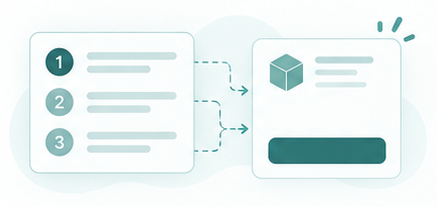
We look at who will use the app, what information they need, and which problem the system should remove.
We choose the functions that are genuinely needed for the work instead of trying to build everything at once.
We create the interface and logic, test real scenarios, and refine the details together.
We configure access, move the required data, and introduce the tool into everyday work.
One main task, a simple interface, and basic logic.
Several sections, data, user roles, or integrations.
Several roles, processes, integrations, and more complex logic.
No. A new app can work alongside your existing systems.
Yes. That is usually more sensible than building a large system straight away.
Yes. We design the architecture with future development in mind.
Yes. Roles can control access to specific sections and actions.
Yes, provided the other system offers a suitable integration method.
Yes, when it genuinely supports the task—for example, working with documents, search, classification, or preparing information.
Tell us how the work is done today and what gets in the way. We will suggest a practical first version and a realistic way to build it.